
A safe refrigerator compressor test starts with power off, a visual inspection, and simple resistance checks with a multimeter. If the compressor windings fail the basic tests, or if the refrigerator still trips the breaker after swapping out the start relay or capacitor, the compressor or sealed system likely needs a technician.
Safe test steps
-
Unplug the refrigerator before touching anything inside or behind it. Compressor and starter parts are connected to mains power, so testing them while plugged in is unsafe.
-
Pull the fridge away from the wall and remove the lower rear access panel. This gives you access to the compressor, start relay, overload protector, and capacitor.
-
Inspect for obvious damage. Look for burned terminals, melted connectors, oil leaks, blackened wires, or a rattling start relay, since those are common clues that the start components or compressor are failing.
-
Test the start relay first. A bad relay can make a healthy compressor look faulty, so checking it before judging the compressor itself is important.
Multimeter checks
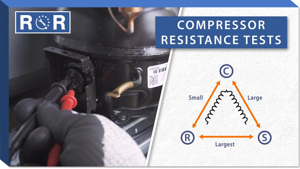
A basic compressor test uses an ohmmeter on the three compressor terminals, usually labeled common, start, and run. You should see resistance between each pair of terminals, and the two lower readings should add up to the highest reading; no resistance, or a short to the metal body, points to a failed compressor winding.
Check each terminal against bare metal on the compressor shell as well. Any continuity there suggests a short to ground, which is a strong sign the compressor is bad and should not be powered further.
What results mean
-
Normal resistance readings: the compressor windings are probably intact, so the fault may be the relay, capacitor, wiring, thermostat, or control board.
-
No resistance between terminals: the windings may be open, which usually means compressor failure.
-
Continuity to the compressor shell: the windings are shorted to ground, which is a compressor fault.
-
Rattling relay or burned connector: the start parts may be bad even if the compressor itself is still usable.
Extra signs to watch
A compressor that clicks repeatedly, hums without starting, runs very hot, or fails to cool the refrigerator properly can be failing. Repeated breaker trips can also happen when a compressor draws too much current during startup or when it locks up mechanically.
When to stop
Stop testing and call a qualified appliance technician if you find shorted windings, oil/refrigerant leaks, or signs the sealed system is involved. Compressor replacement and refrigerant handling are not safe DIY jobs for most homeowners.
A cautious homeowner can confirm a lot with a multimeter and a visual inspection, but the safest rule is simple: if the tests point to the compressor itself, do not keep resetting the breaker and do not keep forcing the fridge to start